Siennica Różana (gmina)
| |||||
| |||||
| |||||
Państwo |  Polska Polska | ||||
Województwo | lubelskie | ||||
Powiat | krasnostawski | ||||
TERYT | 0606102 | ||||
Wójt | Leszek Waldemar Proskura | ||||
| Powierzchnia | 98,37 km² | ||||
| Populacja (30.06.2016) • liczba ludności | 4 254[1] | ||||
| • gęstość | 43,2 os./km² | ||||
Nr kierunkowy | 82 | ||||
Tablice rejestracyjne | LKS | ||||
Adres urzędu: Urząd Gminy22-304 Siennica Różana | |||||
| Szczegółowy podział administracyjny | |||||
| |||||
Położenie na mapie województwa  | |||||
Położenie na mapie województwa lubelskiego 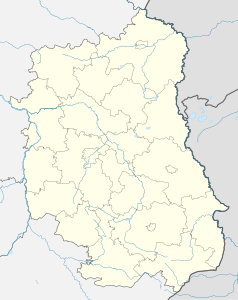  Siennica Różana | |||||
Położenie na mapie Polski  Siennica Różana | |||||
 51°00′N 23°19′E/51,000556 23,312222 51°00′N 23°19′E/51,000556 23,312222 | |||||
Strona internetowa | |||||
Biuletyn Informacji Publicznej | |||||
Portal  Polska Polska | |||||



Siennica Różana (do 1925 gmina Rudka[2]) – gmina wiejska w województwie lubelskim, w powiecie krasnostawskim. W latach 1975–1998 gmina położona była w województwie chełmskim.
Siedziba gminy to Siennica Różana.
Według danych z 30 czerwca 2004[3] gminę zamieszkiwały 4452 osoby.
Spis treści
1 Struktura powierzchni
2 Demografia
3 Sołectwa
4 Sąsiednie gminy
5 Przypisy
Struktura powierzchni |
Według danych z roku 2002[4] gmina Siennica Różana ma obszar 98,37 km², w tym:
- użytki rolne: 71%
- użytki leśne: 22%
Gmina stanowi 8,65% powierzchni powiatu.
Demografia |
Dane z 30 czerwca 2004[3]:
| Opis | Ogółem | Kobiety | Mężczyźni | |||
|---|---|---|---|---|---|---|
| jednostka | osób | % | osób | % | osób | % |
| populacja | 4452 | 100 | 2306 | 51,8 | 2146 | 48,2 |
| gęstość zaludnienia (mieszk./km²) | 45,3 | 23,4 | 21,8 | |||
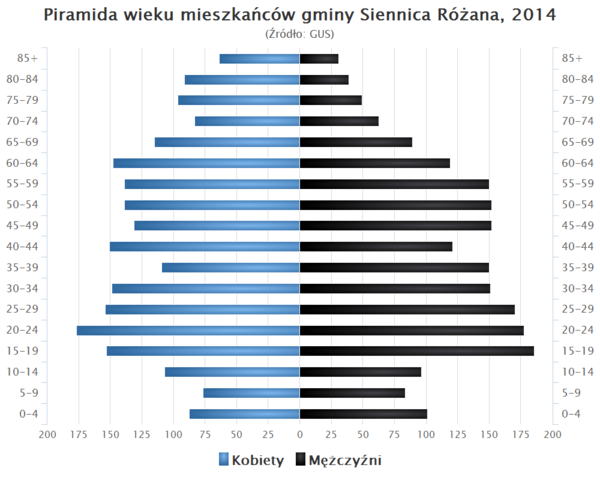
- Piramida wieku mieszkańców gminy Siennica Różana w 2014 roku[1].
Sołectwa |
Baraki, Boruń, Kozieniec, Maciejów, Rudka, Siennica Królewska Duża, Siennica Królewska Mała, Siennica Różana, Stójło, Wierzchowiny, Wola Siennicka, Zagroda, Zwierzyniec, Żdżanne.
Sąsiednie gminy |
Chełm, Krasnystaw, Krasnystaw, Kraśniczyn, Leśniowice, Rejowiec
Przypisy |
↑ ab http://www.polskawliczbach.pl/gmina_Siennica_Rozana, w oparciu o dane GUS.
↑ M.P. z 1925 r. nr 293, poz. 1240
↑ ab Baza Demograficzna – Tablice predefiniowane – Wyniki badań bieżących; Stan i struktura ludności; Ludność według płci i miast (pol.). GUS. [dostęp 2010-09-14].
↑ Portal Regionalny i Samorządowy REGIOset (pol.). regioset.pl. [dostęp 2010-09-14].
| |||||||

| |||||||||||||

| ||||||||||||||||||||


